Hello friends and happy Monday to you...
How many of you like to "do-it-yourself?" It seems that more and more with everyone pinching pennies and the
infinite amount of info that the World WILD Web provides us, we are more capable than EVER to do everything ourselves. Not only are there endless articles - but YouTube.com provides "how to" videos on pretty much anything you can think of...everything from applying false eyelashes to changing oil in your car. And it's all FREE. But when is it time to draw the do-it-yourself line and call a pro?
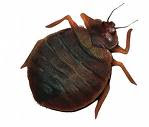
Well, we have some interesting news for you today on the do-it-yourself front. Recently a study was released about bed bugs...and we'd love to hear what you think about it. As you may or may not know, bed bugs are extremely costly and difficult to get rid of once they've decided to make your bed their home. They know no boundaries...and there are epidemics occurring all across the states...from New York, to Ohio, to Seattle. They have been found in the dingiest of hotels, 5 star hotels, college dorms, ritzy neighborhoods and beyond. The consensus has always been: if you think you have bed bugs, call a professional immediately - no exceptions. However, a recent study at Rutgers University has revealed a way for people to take care of their own bed bug problems without the help of a pro. They've developed a way to trap the little blood suckers - it costs about 20 bucks - but takes A LOT of patience. Check out what they have to say and please, tell us: What would you do if you had bed bugs? Would you call a pro or would you do-it-yourself?
You can check out the ScienceNews article here: http://tinyurl.com/y8vjwf8
OR read here:
NEW BRUNSWICK (WABC) -- It just might be the solution to the bed bug infestation that's exploded in the city the last couple years. And what's more, you can do it yourself. And the cost? Less than 20 bucks. It may look like an ordinary cooler, some dry ice, some talcum powder and, an upside down pet dish. But one Rutgers professor says when combined these four ingredients can take a big bite out of a bed bug infestation. "It's a very exciting discovery." Dr. Changlu Wang heads up the urban entomology department at Rutgers University . There, he's been studying bed bugs for nearly 3 years. He knows how quickly, even the smallest bed bug can put a bite on a
victim. You can see, in just seconds, it turns blood red as it feeds, then when done after only a few minutes, it scampers away to hide. Leaving behind? Ugly, itchy bites. Dr. Wang's bed bug trap starts with an ordinary pet bowl - turned upside down. But, the key ingredient? Dry ice. Key, because it releases carbon dioxide or C-O-2. "Carbon dioxide draws bed bugs," says Dr. Wang.
"From the room to the bed." We release carbon dioxide every time we breathe. And Dr. Wang says that rings the dinner bell for bed bugs. So how do you build a bed bug trap of your own? First, use any kind of fabric and line the outside of the pet bowl. This will make it easier for the bugs to climb up. Once over the side they get caught in the middle area. Dr. Wang says you should brush
it with talcum powder. That will make it slippier so the bugs can't escape. Lastly, fill a small cooler - or even a coffee travel mug with dry ice and open the top to let a little C-O-2 vapor escape. And place it in the middle of the over-turned pet dish. The best news? Total cost? Less than $15.
Chang put it to the test when we were there. First, he filled the cooler with dry ice and opened the top to let a little C-O-2 escape. And put it in the middle of the upside down pet dish.
Then he set loose about 10 bed bugs and left the room. Just three minutes later, a third of the bed bugs, attracted by the dry ice, started scaling the pet dish's side and falling into the trap. Dr. Wang wasn't surprised, he used the technique in many contaminated apartments. He says after just one night, one trap he used caught 500 bed bugs. "It is a very useful and can be very valuable too because it is very easy to do."
One note, Dr. Wang says in order to be effective, you have to leave the trap in the room alone for as long as a week. That means humans should limit their time in the room since they breathe out C-0-2, and will compete with the trap. Also, put in new dry ice and empty the trap about every 8 to 10 hours. Right now there's no patent pending for this device. But Wang says one of the big pest companies had taken note and might be coming out with it's own at home kit.
Click here to see some short videos on bed bugs:
http://www.youtube.com/watch?v=4qx751dNw7Q&feature=related
http://www.youtube.com/watch?v=WfKCcSPCOQo
For more information - visit www.horizonpestcontrol.com OR give us call at 201-447-2530.